
Sainte Rita Church (Annonciation Church)
Officially named the Annonciation church, it is popularly known as the Saint Rita church, the patron saint of impossible causes. It is one of the oldest churches in Nice, originally built in the 10th century.
Discover and book the top Nice sights
Officially named the Annonciation church, it is popularly known as the Saint Rita church, the patron saint of impossible causes. It is one of the oldest churches in Nice, originally built in the 10th century.

Located in the Baumettes neighbourhood, this Fine Arts museum is housed in an impressive 19th-century villa and contains an important collection of paintings and sculptures.

The museum of modern and contemporary art was opened in 1990 and features artworks from the 1960s to the present day.

A small collection of some of Matisse's works and items from his own personal collection and that of his descendants are housed in an impressive 17th century Genoese mansion.
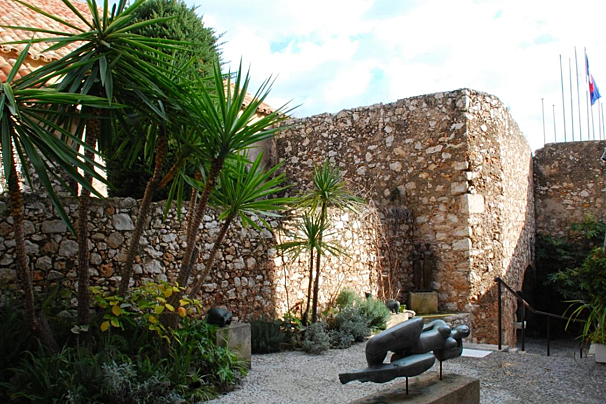
The sculptor, Antoniucci Volti, was born in Italy in 1915 but his family lived in Villefranche-sur-Mer. His collection is housed in the town's 16th-century citadel.

Founded as a photographic studio in 1958, and opened as a gallery in 1972, Jean Ferrero exhibited works from the School of Nice and the New Realism genre.

The museum is located in the Chateau Sainte Hélène, the former private residence of perfume master François Coty, surrounded by a garden with rare aromatic plants. It showcases a collection of 'Naïve Art' paintings.

This priory owned by Father Lemerre was converted into a museum at the end of the Second World War and houses his collection of objets d'art from the late Middle Ages and early modern period including French furniture, glass, sculptures and religious paintings.

Guarding the Bay of Angels, this 19th-century tower is where composer Hector Berlioz created the opening of the famous King Lear overture in 1831, whilst staying here.

Founded by Jean Baptiste Barla in 1850 (locals know it as Museum Barla), this museum showcases a rich collection of zoological, botanical and geological specimens.

This museum moved to its current location in 1989 though it has been open since 1960. It houses a variety of objects, from ancient times to the Middle Ages, including the Roman town of Cemenelum.

The museum of palaeontology is located on the excavation site of the Terra Amata where there is evidence of human inhabitation going back 400,000 years.

This grand noble residence dates to the early 17th century and was the property of the Lascaris-Vintimille family. It has an interesting collection of Baroque art and furniture.

Located in the Allianz Riviera Stadium in Nice, this museum houses more than 45,000 objects ad 400,000 dedicated to all sports, showing their history from the Antiquity to the present.

This impressive villa was built in 1906 by Béatrice Ephrussi de Rothschild. It overlooks the Mediterranean sea from Cap Ferrat and it is full of antique furniture, Old Master paintings, sculptures and a collection of rare porcelain, while the gardens are classified as Notable Gardens of France.

The Asian Arts Museum was created by Japanese architect Kenzo Tange who created a wonderful white marble and glass construction that stands in the middle of a lake in Park Phoenix.

This astronomical observatory is located on top of mont Gros. It was built in 1881 and was designed by Charles Garnier, architect of the Paris Opera House, and Gustave Eiffel, the celebrated creator of the Eiffel Tower.

Housing the largest collection of the Russian painter, Marc Chagall, the Chagall museum is one of Nice's top attractions.