Sights in Villefranche-sur-Mer — 11 of Our Favourites

Discover and book the top Villefranche-sur-Mer sights

Volti Museum, Villefranche-sur-Mer

1. Volti Museum

Location
Villefranche-sur-Mer

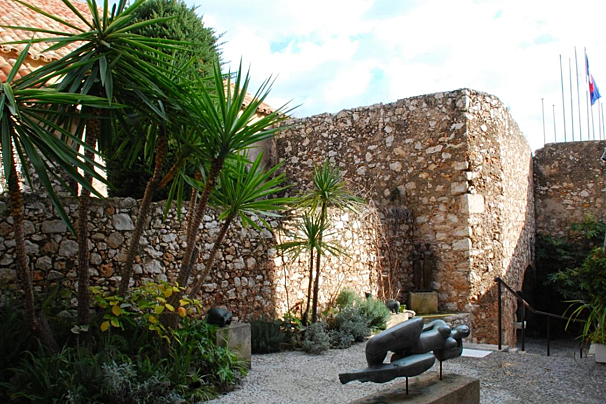
The sculptor, Antoniucci Volti, was born in Italy in 1915 but his family lived in Villefranche-sur-Mer. His collection is housed in the town's 16th-century citadel.

The saint Elme citadel is a massive stone fortress built on the orders of Emmanuel-Philibert of Savoy in 1557 to defend the city and protect the harbour.

Nestling in the base of the Citadel blockhouses, an entire population of bronze, copper and terracotta female creatures featuring voluptuous curves is displayed in a rough stone showcase. Volti began his career as a sculptor in the 1940s after studying in Paris and completing military service.

This museum dedicated to his impressive sculptures was opened in 1981.

Musee de Paleontologie Humaine de Terra Amata

2. Musee de Paleontologie Humaine de Terra Amata

Location
Villefranche-sur-Mer

The museum of palaeontology is located on the excavation site of the Terra Amata where there is evidence of human inhabitation going back 400,000 years.

The museum offers an insight into the original Nice, when there was a warmer climate. Early dwellers hunted elephants, deer and rabbits and used tools made from stones from Nice's pebble beach. There is even a footprint belonging to one if the first inhabitants of Nice.

The site was discovered during the construction of a terrace near the port of Nice in 1966. Archaeologists do not agree on whether it is a vestige of an ancient settlement, or just artefacts from different time periods brought together.

Ephrussi de Rothschild Villa, Saint-Jean-Cap-Ferrat

3. Ephrussi de Rothschild Villa, Saint-Jean-Cap-Ferrat

Location
Cap Ferrat

This impressive villa was built in 1906 by Béatrice Ephrussi de Rothschild. It overlooks the Mediterranean sea from Cap Ferrat and it is full of antique furniture, Old Master paintings, sculptures and a collection of rare porcelain, while the gardens are classified as Notable Gardens of France.

Béatrice was the daughter of baron Alphonse de Rothschild, a banker and renowned art collector. At the age of 19, she married Maurice Ephrussi, a Parisian banker of Russian origin, 15 years her senior, and a friend of her parents. The marriage quickly turned sour for Béatrice. She contracted a serious illness from Maurice, which prevented her from having children. Maurice was a gambler and in 1904, his debts totalled over 12 million gold francs, the equivalent of 30 million euros today.

She divorced Maurice in 1904, and dedicated herself to her passion, art collection. When she inherited her father's fortune, she decided to build her dream home in Cap Ferrat. Works started in the garden, which took 7 years to complete, while the villa was began in 1907. Jacques-Marcel Auburtin was the architect who satisfied the demanding Béatrice and built it with an Italiante northern façade with Renaissance influences and a Venetian-influenced southern façade.

She moved into the villa in 1912, which was turned into her winter residence. Inside it is filled with clever trompe-l’œil paintings which disguise the metal columns and retains much of its opulent and rich furnishings.

You can now visit the villa's stunning landscaped gardens, which include spaces in traditional French style, as well as Spanish, Florentine and Japanese gardens. Inside, witness the villa's luxury in its reception areas, as well as in Béatrice's private apartments, sumptuously decorated and full of works of art. Absolutely worth a visit.

A large building with a clock on top of it

4. Saint-Michel Church, Villefranche sur Mer

Location
Villefranche-sur-Mer

This Baroque Italianate church dates to the 1750s, although it was built on the site of a 14th-century church.

There was a priory on the site in the 13th century, while the 14th-century church was rebuilt in the 18th century.

Look out for the wooden statue of San Rocco, patron saint of dog trainers. Its organ, dating from the end of the 18th century, is one of the oldest working organs in the region.

Saint-Pierre des Pecheurs Chapel, Villefranche-sur-Mer

5. Saint-Pierre des Pecheurs Chapel

Location
Villefranche-sur-Mer

Located near the port in Villefranche is the tiny chapel of Saint Peter, patron saint of fishermen.

Probably dating back from the 16th century, the chapel was used by 20th-century fishermen as a place to store their material and to solve their differences. The chapel is obvious for its pink, yellow and white façade.

Inside, it houses some wonderful frescoes of Saint Peter, painted by Jean Cocteau in 1957. It was his first painted chapel and it depicts five main images, two scenes of Mediterranean life and three dedicated to the life of Saint Peter.

A dirt road going through a forest with mountains in the background

6. Vinaigrier Park

Location
Villefranche-sur-Mer

On the eastern outskirts of Nice lies the national park of Mount Vinaigrier. The hillsides are covered in pine and oak trees and a rare flowering ash species that blossoms in May.

The park has great views over the Baie des Anges and over towards Villefranche.

Paths run through the nature park and if you are lucky, you may spot some local wildlife - migratory and sedentary birds and small mammals (don't worry, no bears here!).

The rich soil conditions also give rise to a wonderful variety of plants and flowers.

From 1st April - 31st October: 7:30-20:00, 1st November - 31st March: 08:00-18:00.

Citadelle de Villefranche, Villefranche-sur-Mer

7. Citadelle de Villefranche

Location
Villefranche-sur-Mer

The citadel of Villefranche-sur-Mer looms over the old town; it is open to the public and has a number of interesting features.

Built in 1557, the citadel now houses the Town Hall, a convention centre, three museums and an open-air theatre.

Also within the old stone walls is a collection of bronze and copper sculptures by the artist Volti.

Le Fort du Mont Alban

8. Le Fort du Mont Alban, near Nice

Location
Villefranche-sur-Mer

This 16th century hilltop fort was built in 1557 and is almost perfectly preserved, it looks out over the coastline of the French Riviera all the way to the Italian border. Mont Alban is located in the east of Nice in the Mont Boron National Park area, with Nice on one side and Villefranche-sur-Mer on the other - you can hike up to the fort from either town. The castle was built on the orders of the Duke of Savoy in response to the siege of Nice; when you get up there you’ll understand why he chose this spot - the view in all directions couldn’t be any better.

The scale of the scenery up here is just breathtaking; looking out from the front of the castle you can see the peninsula of Cap Ferrat jutting out to your far left with the bay of Villefranche-Sur-Mer curving round below the cliffs, just a few strides to the other side of the castle and the city of Nice unfolds beneath you. The fabulous views of the coastline stretch from Cap d’Antibes in the west all the way to Bordighera (Italy) in the east and on a clear day you can just about make out Corsica in the distance.

The condition of the fort is really very impressive - we’re not talking about a ruin here, it is a fully intact building where you can literally walk up the steps to the massive wooden front-door (although you are advised not to stand on the drawbridge). Look up to the turrets and you’ll see the sun glinting off the beautiful coloured tiles that overlap like fish scales, then stroll all around the fort to see the towers and crenellations.

A wooden bench sits on the side of a path in a park

9. Parc du Mont Boron

Location
Villefranche-sur-Mer

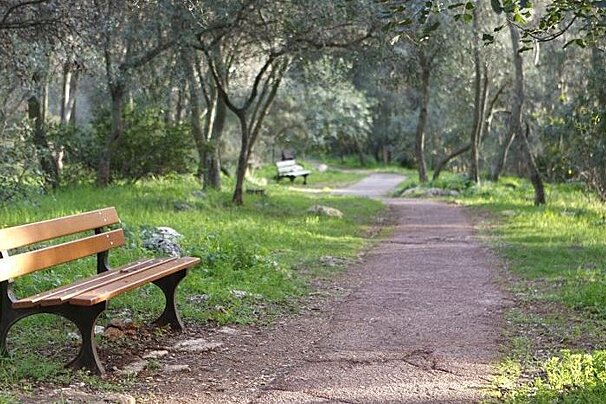
Looming protectively over the exclusive Cap de Nice area, the Parc du Mont Boron is a hilltop forest with picnic areas, olive trees, exercise circuits, hiking trails, boules pitches and a 16th-century castle. Sitting on the crest of a hill just over 190m high, Parc du Mont Boron looks over Nice to one side and Villefranche-Sur-Mer to the other - if you hike up to Fort Alban you can enjoy sweeping panoramic views from the Cap Ferrat peninsula in the east all the way to the Esterel mountains in the west.

The park itself is home to a forest that covers 57 hectares of Mediterranean plants, including olive trees and Alesso pine. Like many parks in the region, it is a “Parc Zéro Pesticide”, meaning that no pesticides are used to by their groundskeepers.

If you’ve had enough of the beach, the Parc du Mont Boron is an ideal escape from the hustle and heat of Nice. 11km of footpaths allow you to explore the forest and take you up to Fort Alban - a 16th century castle that is impressively well-preserved. You can’t go in unless you are part of an organised group, but you can walk all around the walls and go up the stone steps to the front door. Contact the Centre de Patrimonie (+33 (0) 4 92 00 41 90) to book a place on a guided tour if you want to see inside.

Shaded picnic areas with plenty of space for children to throw a frisbee make the park popular with families, while retired locals can often be found playing leisurely games of boules (or petanque, we’ve not yet figured out the difference) on one of the nearby pitches.

For the more energetic there is a 1.5km fitness trail that weaves through the forest past exercise stations that are designed to put you through your paces with pull-ups, sit-ups and other resistance moves. If you really want to punish yourself you can warm up by running to the park via one of the trails that come up from Nice or Villefranche-Sur-Mer; the following paths all lead to the park:

  • Escalier de Verre (Avenue des Hespéride, between Nice and Villefranche-Sur-Mer)
  • Sentier des Agaves (Avenue Pierrette, just off Boulevard Princesse Grace de Monaco at Cap de Nice)
  • Chemin Tranquille (Route Forestière, just before Avenue des Hespéride)
  • Chemin des Crêtes du Mont Boron (Boulevard du Mont Boron, just before Plateau du Mont Boron)

If you’d rather take it easy then hop on the number bus 14, which will take you directly to Mont Boron. There is also free parking that can be accessed via the Route Forestiere or Avenue des Hesperide.

Parc du Mont Boron has no café, shops or toilets so make sure you are well-prepared before you arrive.

Goetz-Boumeester Museum, Villefranche-sur-Mer

10. Goetz-Boumeester Museum

Location
Villefranche-sur-Mer

This museum's collection is composed of the donation of Henri Goetz to the town of Villefranche. It is located on the ground floor of an old barrack building in the 16th-century citadel, which houses many museums.

Henri Bernard Goetz was a French-American surrealist painter and engraver, famous for inventing the carborundum printmaking process, in which the image is created by adding light passages to a dark field. He was a friend of Léger and Kandinsky, as well as a notable member of the Parisian resistance during the Second World War, fleeing to Cannes after he and his wife, Christine, were almost arrested.

Their collection holds works by many famous contemporary artists including Picasso, Miro, Picabia and Hartung. There are also paintings by Christine Boumeester and Henri Goetz.

Vigier Park, Nice

11. Vigier Park

Location
Villefranche-sur-Mer

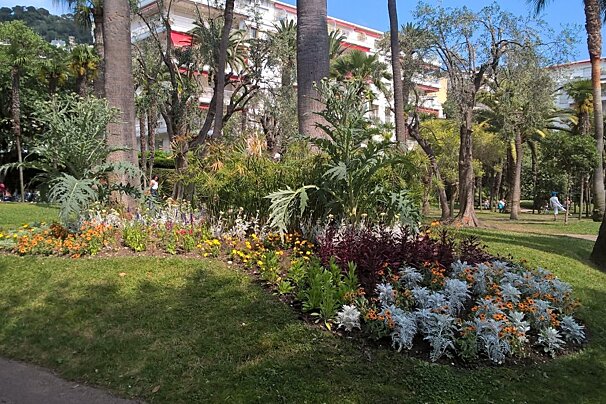
Located close to the city’s harbour, this park stretches over a surface of 1 hectare.

The park is neither one of the largest nor one of the oldest parks in Nice as it was only recently built in 1971 on the property of a former local viscount, Achille Georges Vigier.

The greenery consists mainly of Mediterranean species, palm trees and sundry exotic specimens. Most importantly, the first Phoenix Canariensis was planted on this site.

Opens at 08:00. Closing time depends on the time of year (19:00 in April, May and September; 20:00 from June to August; 18:00 from October to March)