
Parfumerie Galimard, Eze
Free guided tours of a historic perfume factory in the medieval village of Eze.
Discover and book the top Nice sights
Free guided tours of a historic perfume factory in the medieval village of Eze.

This lovely 10 hectare park is home to a Neo-Gothic 19th-century castle, built for a Russian aristocrat with the most luxurious interior of painted frescoes and chandeliers.

This factory for perfume, soap and cosmetics, has very modern laboratories and workshops. Discover the secrets of manufacturing perfumes and cosmetics.

Founded as a photographic studio in 1958, and opened as a gallery in 1972, Jean Ferrero exhibited works from the School of Nice and the New Realism genre.

A small collection of some of Matisse's works and items from his own personal collection and that of his descendants are housed in an impressive 17th century Genoese mansion.

Located on the island of Saint Honorat, the abbey is still occupied by monks. It's possible to receive a guided tour and re-charge your spiritual batteries.
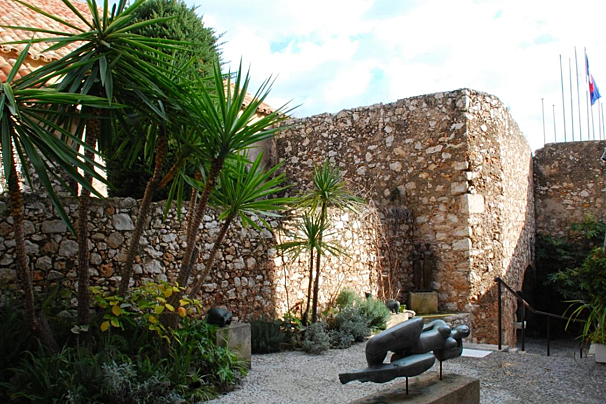
The sculptor, Antoniucci Volti, was born in Italy in 1915 but his family lived in Villefranche-sur-Mer. His collection is housed in the town's 16th-century citadel.

The museum of modern and contemporary art was opened in 1990 and features artworks from the 1960s to the present day.

This impressive villa was built in 1906 by Béatrice Ephrussi de Rothschild. It overlooks the Mediterranean sea from Cap Ferrat and it is full of antique furniture, Old Master paintings, sculptures and a collection of rare porcelain, while the gardens are classified as Notable Gardens of France.

This grand noble residence dates to the early 17th century and was the property of the Lascaris-Vintimille family. It has an interesting collection of Baroque art and furniture.

Located in the Baumettes neighbourhood, this Fine Arts museum is housed in an impressive 19th-century villa and contains an important collection of paintings and sculptures.

With items from prehistoric times, and fine arts and decorative arts from as early as the 17th century, all the way up to the first half of the 20th century.

Eze's exotic gardens were created after the Second World War, in the ruins of Eze castle. Located on steep terrain, it boasts wonderful panoramic views of the sea, the Esterel mountains and the Saint-Tropez gulf.

Located in the Allianz Riviera Stadium in Nice, this museum houses more than 45,000 objects ad 400,000 dedicated to all sports, showing their history from the Antiquity to the present.

Guarding the Bay of Angels, this 19th-century tower is where composer Hector Berlioz created the opening of the famous King Lear overture in 1831, whilst staying here.

The museum is located in the Chateau Sainte Hélène, the former private residence of perfume master François Coty, surrounded by a garden with rare aromatic plants. It showcases a collection of 'Naïve Art' paintings.

Beautiful baroque architecture, examples of 17th- and 18th-century frescoes and furniture and a large terraced garden.

The world-famous painter Pierre-Auguste Renoir lived at La Ferme des Collettes with his family from 1907 until his death in 1919. Renoir moved to Cagnes-Sur-Mer in the hopes that the warm climate would improve his arthritis, which eventually confined him to a wheelchair. The house in which he spent the last 12 years of his life is set in a beautiful estate full of citrus and olive trees, looking out along the coastline all the way to way to the Cap d’Antibes.